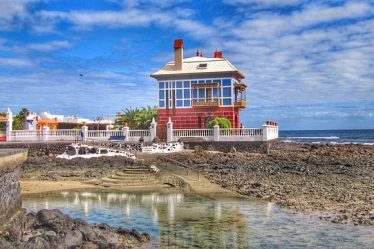
There’s something magical about island walking. It’s knowing that, despite the fact that there are enough people and infrastructure to sustain a society (or whole country), we can simply walk entire length of it. Throughout, you’re surrounded by water, the climate is often unpredictable and interesting, and the two of these factors leads to more biodiversity.
Some islands are formed through volcanic activity, while others have rumours of being magnetic marvels. Whether you’re seeking beach walks or mountain hiking, these islands are the best Europe has to offer.

São Miguel, Azores (Portugal)
São Miguel is the largest of the Azores islands. It has some extraordinary volcanic walking, and some extraordinarily diverse landscapes. Many cannot believe it’s Europe because it feels sub-tropical (arguably the only real tropical area in Europe).
This island has an 8-day walking itinerary that showcases essentially all of the island’s most spectacular features. The journey starts in the iconic Sete Cidades crater walk, covering 7.8 miles through Europe’s most dramatic volcanic calderas. Twin lakes create a stunning natural amphitheater and is perfect for a picture.
The adventure continues with the Rota da Agua loop (4.6 miles) through mysterious tunnels, before going around the 8 mile Lagoa das Furnas circuit with steaming hot springs. Orbis Ways offers organized tours of these volcanic trails, including places to stay along the way.
Jersey, Channel Islands
Jersey’s coastal path is a highly accessible ones, as you can comfortably circumnavigate the entire island’s terrain. It measures only 9 miles east-west and 5 miles north-south, so it’s a 3-4 day trip for most walkers, making it ideal for a long weekend.
The path isn’t just about Jersey’s landscapes, though the heath-covered cliffs and rocky coastlines are certainly interesting – as are the coves and remote beaches. But the island was very important during WWII, and so there are plenty of fortifications and museums left over to tell this wartime story. It’s why many visit.
The North Coast section from Rozel to Greve de Lecq is great for covering some of Jersey’s most dramatic cliffs and wide sandy expanses.
Corsica, France
Corsica is one of the ultimate European island walking challenges with its legendary GR20 trail, stretching almost 180 kilometers across the island’s granite mountains. It’s often regarded as Europe’s toughest long-distance hiking route, so this north-south hike is not for the faint-hearted. You must have experience and give yourself around 15 days to complete it.
The trail goes through the granite peaks and pine forests, where you can stop off at mountain lakes with never-ending views. While the complete GR20 does demand some serious hiking experience, Corsica does have some shorter cross-island sections too, meaning you needn’t rule it out completely if you only have a long weekend or you’re not quite fit enough yet. There are going to be technical rock scrambles just about everywhere high up though, but some gentle forest paths lay below.
Madeira, Portugal
Madeira’s famous levada trails are a truly one-of-a-kind walking network. These ancient irrigation channels are carved into cliffsides. You’ll be following through these tunnels, which tend to be quite flat despite the island’s topography. The island is around 35 miles long and 13 miles wide, so it’s a good size to feel slightly lost in, yet always have coastal views.
The terrain goes from humid subtropical coasts to the mountain peak of Pico Ruivo at 1,862 meters. This allows for microclimates, many interesting flowers and wildlife, along with waterfalls and cliff-top paths.
Notable routes include the Levada do Caldeirão Verde and Levada das 25 Fontes. The mild climate all year round means that it’s a good choice no matter what season you’re in (though summer may be too hot).
Sardinia, Italy
Sardinia’s ambitious Cammino 100 Torri is an epic 1,284-kilometer trek. This goes to show how large the island’s perimeter is, but its size has led to it being historically very important, meaning you’ll come across plenty of coastal towers that once protected against invasions. This route can be divided into eight manageable sections, with individual daily stages ranging from 8-21 kilometers. It’s not inaccessible due to difficulty, but it does take time.
The terrain is mostly coastal cliffs and Med beaches. But the inland mountains are where you will find the panoramic views and migrating birds. The Costa del Sud and Capo Spartivento regions are particularly good for walking.
Santorini, Greece
Santoini is often associated with expensive white-washed hotels and lots of crowds, making it one of the best places to visit in Greece. The truth is that this compact volcanic island can be great for hiking in, and hiking can be a great way of getting out the way of the crowds.
The famous Fira to Oia cliff-top trail is the crown jewel at 10.5 kilometers. This route has incredible caldera views and access to world-renowned sunset vantage points that really defined Santorini’s romantic appeal.
Beyond the classic cliff walk though, the Ancient Thera hike is a 3.5 kilometers uphill walk to archaeological remains (what else would you expect in Greece?), while Mesa Vouno Mountain becomes accessible from either Kamari or Perissa beaches.
Crete, Greece
As the largest Greek island, Crete is a serious space for long walks. The 16-kilometer Samaria Gorge hike is a famous one through Europe’s longest gorge, but there are also sections of the E4 European Path that crosses the island from west to east. The entire island is 160 miles east-west, so it’s not something you’re going to walk over a long weekend.
The White Mountains have high-altitude routes for those more experienced, while coastal paths that stop at Minoan archaeological sites are more casual, and are a great way to see the beaches. The terrain has a bit of everything, from scrubland to snow-capped peaks, and of course many of the politically important Greek ruins.
European islands are mostly mountainous and sandy, which is a great start. But what makes them great is that they almost always have great infrastructure, are safe, and have mild climates all year round.